Well, actually, I am changing puzzles. While I will still be thinking of ways to focus and design my monument assignment, our class meeting on Tuesday sparked some ideas, and, I think, a more interesting puzzle. I work at Le Moyne College, named after Simon Le Moyne a seventeenth-French Jesuit and one of the first Europeans to enter what is now Central New York. We sit on Onondaga land. The Onondagas are one of the original five members of the Haudenosaunee (Iroquois) and, as the centrally located nation in the metaphorical Haudenosaunee longhouse, they are also known as the Keepers of the Fire, which is the symbolic fire of the Haudenosaunee Confederacy. When Simon Le Moyne and his Jesuit and French compatriots arrived, well, that’s where the story gets interesting, and quite complicated and the source of tensions between the Jesuits and Onondagas to this day. Talk about your narrative and counter-narrative! The sad thing is that most of our students, even history majors, have no idea about this history.
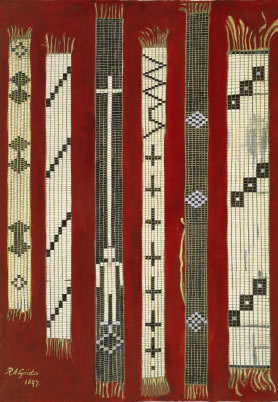
For students to create a narrative and/or counter narrative with this story, use of digital media will make it much easier. The primary sources for the Jesuits version of events is the Jesuit Relations. Man those Jesuits wrote a lot. Creighton University has all of the volumes of the JR digitized, and they are easy to search, at least for European names. We will have to discuss the use of Iroquioan language in the JR. These sources are quite problematic and will serve as a good lesson on reading primary sources for evidence as opposed to information. Primary sources for the Onondagas are a bit trickier, but, again, digital media will help. These sources will come in the form of oral tradition and the use of wampum belts. There are videos of Onondaga people discussing these belts and traditions. These sources are also problematic and will offer another challenge for students in evaluating them as evidence. FUN!
There is also a local museum that we will be visiting as a class. It used to be known as Ste. Marie Among the Iroquois, and locals referred to it as the French fort. It was interpreted according to the story found in the JR. it is now known as Ska-nonh: Great Law of Peace Center and tells the story of the Onondaga. At the center, there are videos of Onondaga peoples telling their stories. This will also help the students understand that narrative.
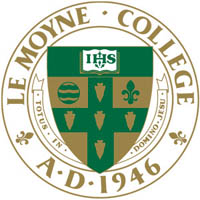
I would like to have students create a digital project from this work. The story will also cover issues of land dispossession, the rise of the salt industry in Syracuse (our nickname is the Salt City and not because our roads are covered in it come winter.) It involves the history of the Catholic church as the Jesuits worked and failed to convert the Onondagas, and of the Jesuit institution where they spend four years of their lives. The names of the French Jesuits are everywhere on campus: Dablon, Brebeuf, Daniel, and, of course, Le Moyne. The history of the Onondaga is no where to be seen, although the college seal includes five arrowheads; they are pointing down, indicating the Jesuits supposedly peaceful intentions. The Onondagas see the Jesuits’ intentions to be anything but peaceful. The history is anything but in the past.
In creating a public facing digital project, I will need to work with students to move from writing traditional papers to create interpretations that are still historically sound, but also be much more concise than they’re used to as well as having visual and audio elements. The last two are still a challenge for me. I envision a digital map showing key areas in the story of Onondaga and Jesuit relations as well as how their histories developed somewhat separately. Short student videos? Podcasts? I have a clearer idea on using digital media to gather evidence, but will still need to think more about the final digital project, which I think should be geared towards other Le Moyne students as well as faculty, staff, administrators, and our campus Jesuit population who are still upset that Ste. Marie Among the Iroquois is no more. As I said in one of my earlier posts, inertia is a powerful force, and trying to get myself to change course at this point in my career is challenging, even if I am a most willing participant.
