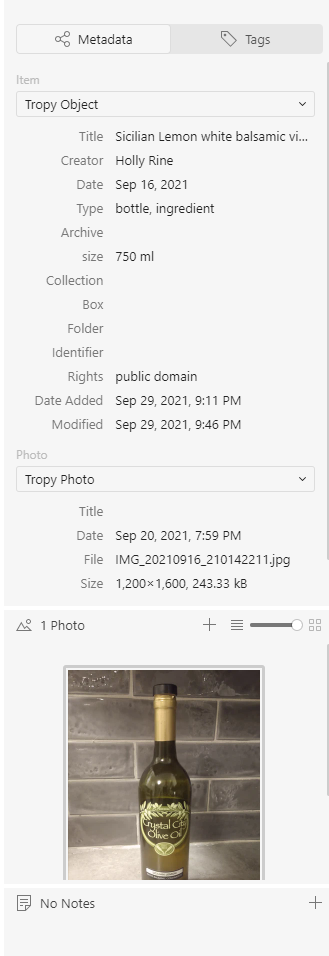
Prior to taking this introductory class in Digital Public Humanities, I will admit that I never gave metadata much thought beyond reading what was included in online sources without really questioning. I got the information, and I was good to go. Now I am digitizing my kitchen and realizing how important metadata is to providing sufficient information in a way that gives the reader as accurate a depiction of the image or source as possible.
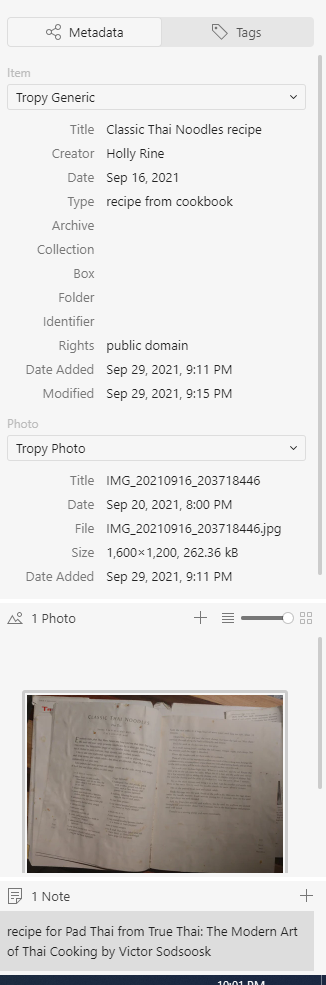
The Tropy generic metadata template works much better for documents than for images. Of course, most people would be using Tropy for organization of documents. With this information, it is much easier to organize material by topics as well as keeping bibliographic information handy. I have learned the hard way, after a few painful lessons, the importance of keeping track of bibliographic information so as to not waste time in a search later on. This method also allows for consistency.
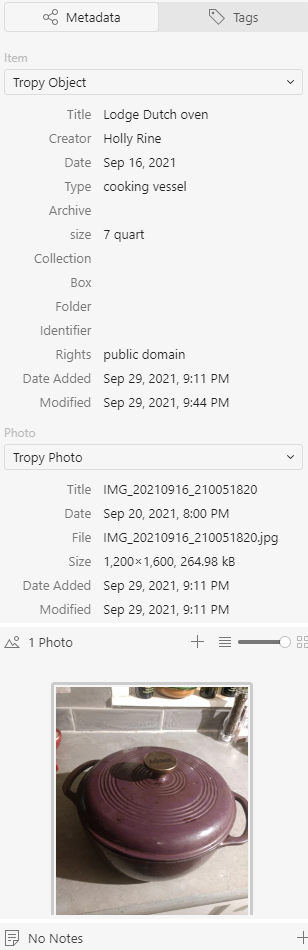
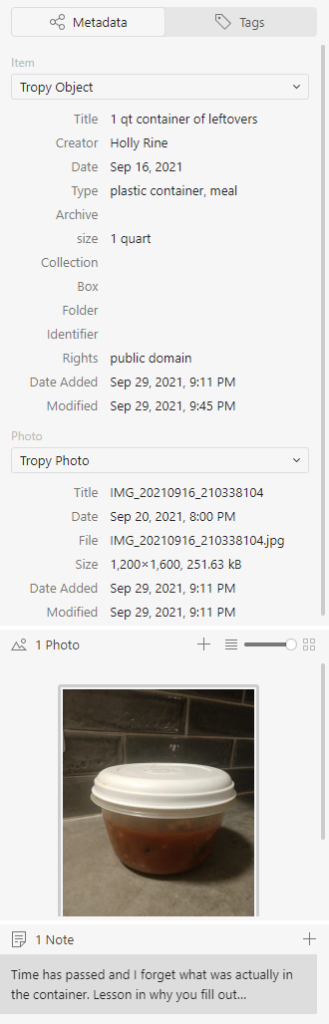
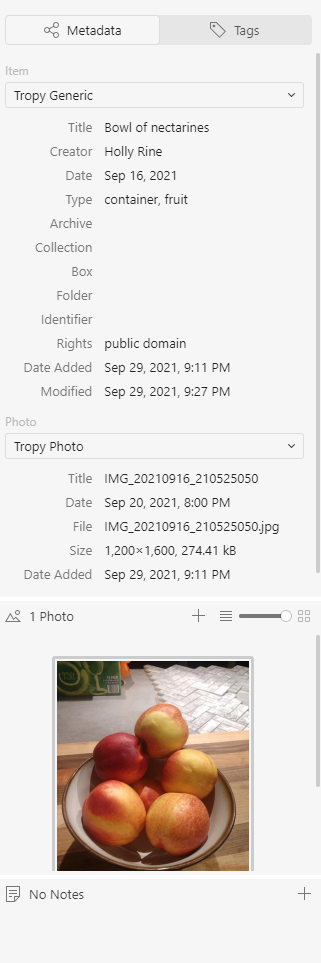
For the objects listed from my kitchen, I thought information such as size and material type (enamel, plastic, glass) would be helpful as well. I customized the generic template for objects that included a size and used it for all five items below. I also wanted to list the actual content of the “leftover” object, but I had taken the photo a couple weeks ago and already had forgotten what was in it. This, of course, served as a lesson for the importance of recording information as soon as possible.